
Lesson
Why We Save
Summary
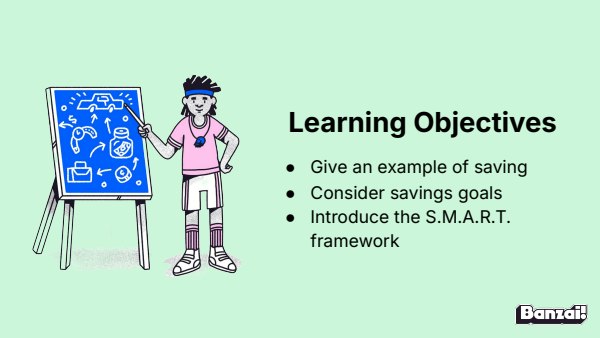
Saving isn't about saying no to fun now — it's about saying yes to something better later. Explore delayed gratification, opportunity cost, and the S.M.A.R.T. framework as students build a real savings plan for something they actually want.
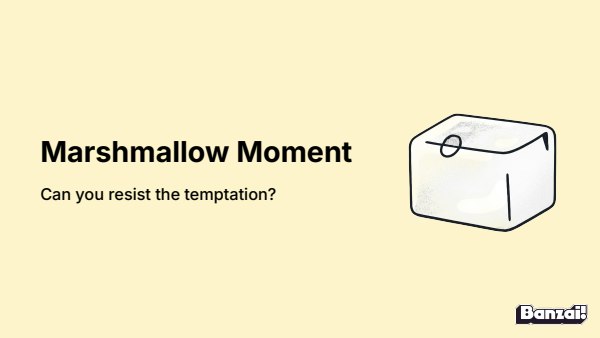
Warm-Up: The Marshmallow Moment
- Hand out one marshmallow per student with the promise of a second if they resist eating it
- Ask what makes waiting hard and what helps them hold out for more
Instruction
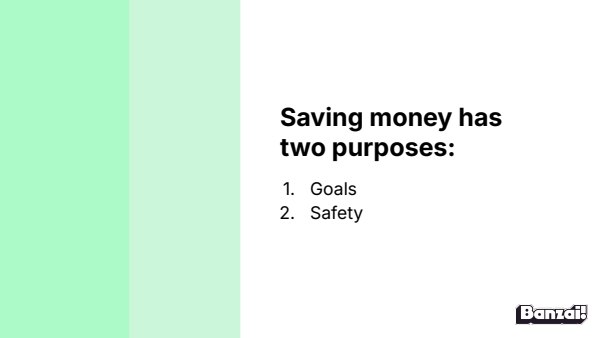
- Walk through the two purposes of saving — goals and safety
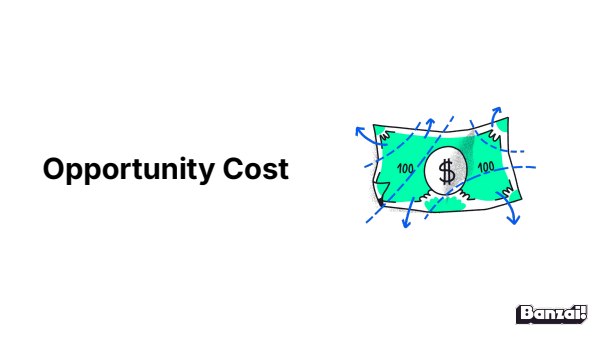
- Introduce opportunity cost and the S.M.A.R.T. goal framework across short instruction slides
Discussion: Spend, Save, Share, or Invest?
- Assign corners of the room to Spend, Save, Share, Invest
- Read scenarios aloud and have students move to their choice, then share reasoning
Activity: S.M.A.R.T. Goal & Microeconomics
- Students complete the S.M.A.R.T. Goal worksheet to define a real savings goal
- Students work through the Microeconomics decision-making section on workbook page 6
Wrap-Up & Assessment
- How many parts of the S.M.A.R.T. goal acronym can you remember?
| Est. Time | Activity | Description |
|---|---|---|
| 3 min | Warm-Up: The Marshmallow Moment |
|
| 8 min | Instruction |
|
| 8 min | Discussion: Spend, Save, Share, or Invest? |
|
| 8 min | Activity: S.M.A.R.T. Goal & Microeconomics |
|
| 3 min | Wrap-Up & Assessment |
|
Lesson Prep

Elementary Personal Finance Workbook
Offline activities covering financial vocabulary, budgeting, and saving.

Creating a S.M.A.R.T. Goal
Turn a savings idea into a specific, measurable goal.
Class Presentation
Includes an 18-slide deck with teacher notes. Present from Banzai, download a PDF, or copy it to Google Slides.

Presentations, Ready to Go
- Built-in PresentationPresent full screen, straight from Banzai
- Copy to Google SlidesMake an editable copy for your class
- Download or PrintSave as a PDF or print
- Teacher NotesSlide-by-slide guidance, printable as one handout
Unit 1: Earning, Spending, and Saving

Wants, Needs, and Spending Choices
Every dollar can only be spent once, and that simple fact shapes every money decision we make. Explore opportunity cost, the difference between wants and needs, and how personal values guide spending choices.
Smart Shoppers
Learning how to navigate external influences like peers and advertising, as well as understanding price and quality comparisons, will help you begin to make smart shopping choices based on your own values.

Why We Save
Saving isn't about saying no to fun now — it's about saying yes to something better later. Explore delayed gratification, opportunity cost, and the S.M.A.R.T. framework as students build a real savings plan for something they actually want.
How do Banzai lesson plans work? See the FAQ.