
Lesson
Online Shopping Scams
Summary
Forty-five dollars can feel like a steal — until you realize you just handed it to a criminal. This lesson breaks down the most common online scams targeting teens and gives students a concrete action plan for what to do when a deal turns into a theft.
Bellringer: The Deal That's Too Good
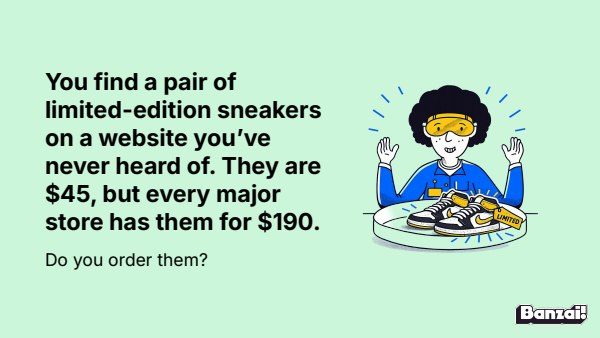
- Display the sneaker scenario and give students 1-2 minutes to write their reasoning
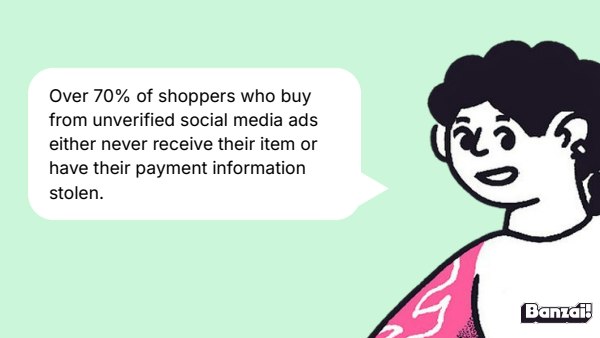
- Cold-call a few students before revealing the 70% statistic on the next slide
Instruction
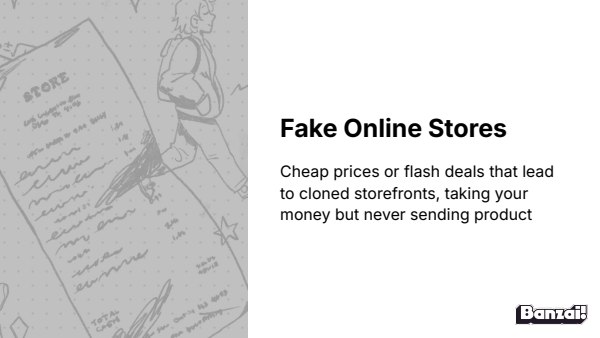
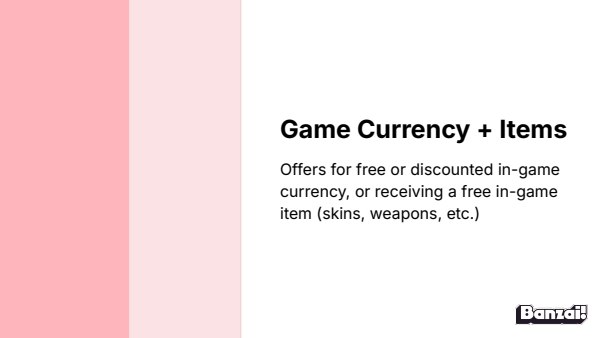
- Walk through fake storefronts, gaming currency scams, and suspicious payment methods one concept per slide
- Use the Red Flags slide as a checklist students can reference later
- Reinforce that getting scammed is a crime committed against them, not a personal failure
Discussion: Whose Fault Is It?
- Facilitate a class conversation on shame, blame, and reporting culture
- Push students to articulate their own responsibility for protecting their financial actions online
Activity: Dangerous Websites in Workbook
- Have students complete pages 11-12 of the Dangerous Websites workbook independently
- Circulate to check that students can identify red flags in each example storefront
Wrap-Up & Assessment
- List 2 red flags you'd see in a scam storefront.
- What would you tell a friend who got scammed buying something online without their parent's permission?
| Est. Time | Activity | Description |
|---|---|---|
| 5 min | Bellringer: The Deal That's Too Good |
|
| 15 min | Instruction |
|
| 10 min | Discussion: Whose Fault Is It? |
|
| 10 min | Activity: Dangerous Websites in Workbook |
|
| 5 min | Wrap-Up & Assessment |
|
Lesson Prep

Digital Citizenship Workbook
Offline activities about passwords, malware, and digital wellness.
Class Presentation
Includes an 18-slide deck with teacher notes. Present from Banzai, download a PDF, or copy it to Google Slides.
Presentations, Ready to Go
- Built-in PresentationPresent full screen, straight from Banzai
- Copy to Google SlidesMake an editable copy for your class
- Download or PrintSave as a PDF or print
- Teacher NotesSlide-by-slide guidance, printable as one handout
Unit 2: Internet Safety

Phishing & Scam Messages
Phishing isn't just about sketchy links — the best scams look like your bank, your school, or your best friend. This lesson breaks down the psychology behind phishing tactics and gives students concrete habits to verify before they click.

Online Shopping Scams
Forty-five dollars can feel like a steal — until you realize you just handed it to a criminal. This lesson breaks down the most common online scams targeting teens and gives students a concrete action plan for what to do when a deal turns into a theft.

Safe Online Interactions
Online friends aren't real friends—they're strangers wearing a friendly filter. Explore how predators manipulate trust through flattery and secrecy, and learn the simple steps to block, document, and report unsafe behavior.
How do Banzai lesson plans work? See the FAQ.