
Lesson
Loan Mechanics
Summary
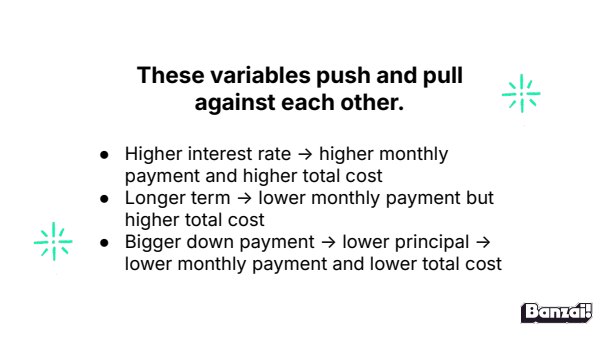
Every loan is just four variables fighting each other. This lesson breaks down how principal, interest rate, term, and down payment interact — and why amortization means you pay mostly interest first.
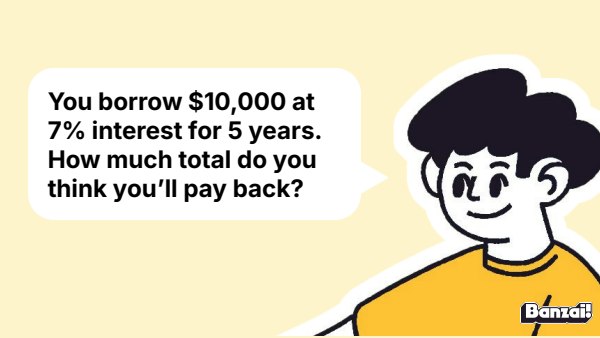
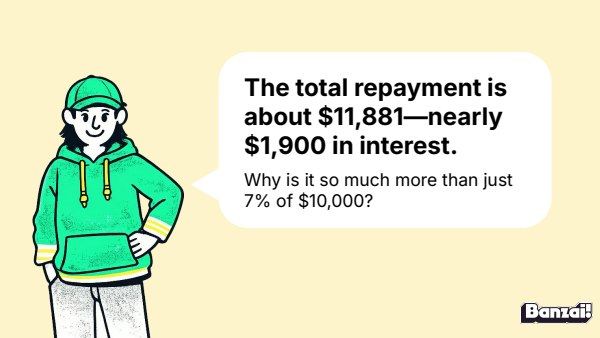
Bellringer: The $10,000 Surprise
- Estimate the total cost of a $10,000 loan at 7% for 5 years.
- Cold-call 2–3 students for guesses before revealing the answer.
Instruction
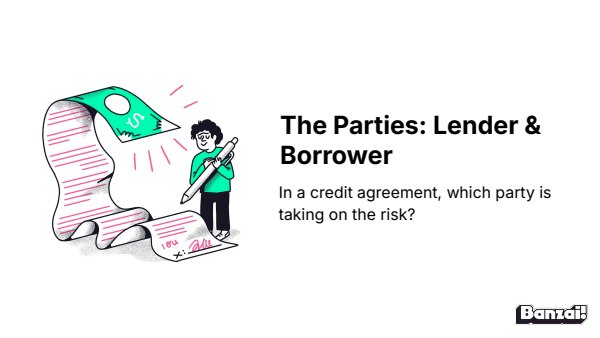
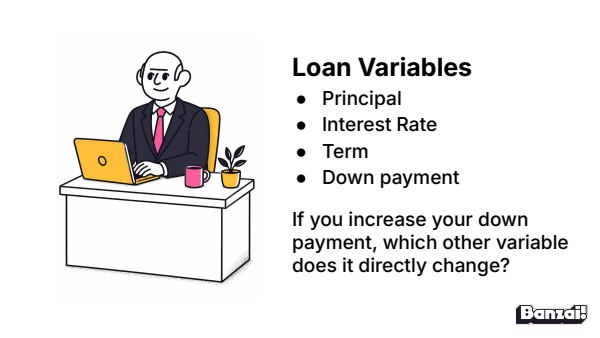
- Introduce lender vs. borrower roles and the four loan variables: principal, interest rate, term, and down payment.
- Define simple vs. compound interest and fixed vs. variable rates.
- Explain amortization and why extra payments reduce both term and total interest.
Activity: Simple vs. Compound Interest Calculator
- Students open the Simple vs. Compound Interest Calculator and run 3 scenarios varying principal, rate, and term.
- Circulate to ensure students toggle between simple and compound views and record results.
Discussion: Which Variable Matters Most?
- Discuss which variable has the biggest impact and which they control most.
- Push students to defend answers with calculator evidence from their scenarios.
Wrap-Up & Assessment
- Name one thing you'll check before signing any loan agreement.
- Why does a longer loan term lower monthly payments but raise total cost?
| Est. Time | Activity | Description |
|---|---|---|
| 5 min | Bellringer: The $10,000 Surprise |
|
| 10 min | Instruction |
|
| 15 min | Activity: Simple vs. Compound Interest Calculator |
|
| 8 min | Discussion: Which Variable Matters Most? |
|
| 7 min | Wrap-Up & Assessment |
|
Lesson Prep

Simple vs. Compound Interest Calculator
See the different simple and compound interest make when it comes to your loan principal.
Class Presentation
Includes a 19-slide deck with teacher notes. Present from Banzai, download a PDF, or copy it to Google Slides.
Presentations, Ready to Go
- Built-in PresentationPresent full screen, straight from Banzai
- Copy to Google SlidesMake an editable copy for your class
- Download or PrintSave as a PDF or print
- Teacher NotesSlide-by-slide guidance, printable as one handout
Unit 6: Credit & Borrowing

Foundations of Credit
Every time you swipe, tap, or sign is a promise to pay someone back later. This lesson introduces how borrowing works, why lenders charge interest, and what makes someone creditworthy.

Loan Mechanics
Every loan is just four variables fighting each other. This lesson breaks down how principal, interest rate, term, and down payment interact — and why amortization means you pay mostly interest first.

Credit Cards vs. Debit Cards
This lesson compares debit and credit cards by funding source, long-term cost, and fraud protection, then puts students in the shoes of a shopper deciding which card to use.
How do Banzai lesson plans work? See the FAQ.