
Lesson
Entrepreneurship Part I
Summary
Entrepreneurship is the process of starting a business to solve a problem, taking on financial risk in hope of earning a profit. This lesson talks about business ideas, value propositions, market research, and competitor analysis.
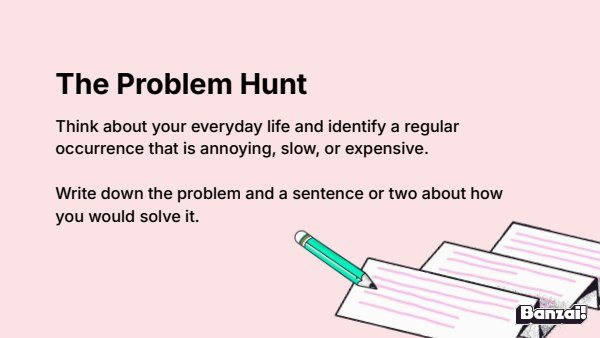
Bellringer: The Problem Hunt
- Students identify an everyday annoyance and write a brief solution—framing entrepreneurship as problem-solving.
Instruction
- Define value proposition and elevator pitch.
- Introduce market research and target demographic (ICP).
- Explain competitor analysis—what to learn and why it matters.
Discussion: Ice Cream Shop Locations
- Walk through the ice cream shop scenario, debating two locations (high school vs. retirement community).
- Analyze location choice, value proposition, menu and prices, and competitor analysis.
Activity: How Much Can My Business Make?
- Students complete the pretest and start the How Much Can My Business Make? simulation
Wrap-Up & Assessment
- Define value proposition.
- Describe the target demographic for a new athletic shoe store.
| Est. Time | Activity | Description |
|---|---|---|
| 5 min | Bellringer: The Problem Hunt |
|
| 10 min | Instruction |
|
| 15 min | Discussion: Ice Cream Shop Locations |
|
| 10 min | Activity: How Much Can My Business Make? |
|
| 5 min | Wrap-Up & Assessment |
|
Lesson Prep

How Much Can My Business Make? Pretest
Find out what students know before they play the game.

How Much Can My Business Make? Game
Students find out what it will take to earn a profit with a small business.
Class Presentation
Includes a 15-slide deck with teacher notes. Present from Banzai, download a PDF, or copy it to Google Slides.


Presentations, Ready to Go
- Built-in PresentationPresent full screen, straight from Banzai
- Copy to Google SlidesMake an editable copy for your class
- Download or PrintSave as a PDF or print
- Teacher NotesSlide-by-slide guidance, printable as one handout
Unit 3: Earning Income

The Gig Economy
Working as an independent contractor can be a risky and rewarding way to make a living. This lesson covers the financial elements of being an independent contractor, including employment taxes, pros and cons, and tax write-offs.

Entrepreneurship Part I
Entrepreneurship is the process of starting a business to solve a problem, taking on financial risk in hope of earning a profit. This lesson talks about business ideas, value propositions, market research, and competitor analysis.

Entrepreneurship Part II
Entrepreneurship involves taking on financial risk in hopes of earning a profit. This lesson focuses on the math and risks of starting your own business—break-even analysis, legal structures of new businesses, bootstrapping, and the hazards of early businesses.
How do Banzai lesson plans work? See the FAQ.