
Summary
Money in minus money out sounds simple—until one bad month wipes out savings. This lesson explores how cash flow works, why timing matters, and how to keep more money than you spend.
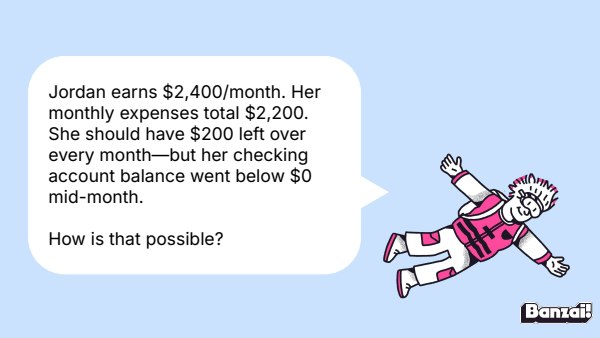
Bellringer: Where Did the Money Go?
- Display the Where Did the Money Go scenario and give students 2 minutes to write a quick response
Instruction
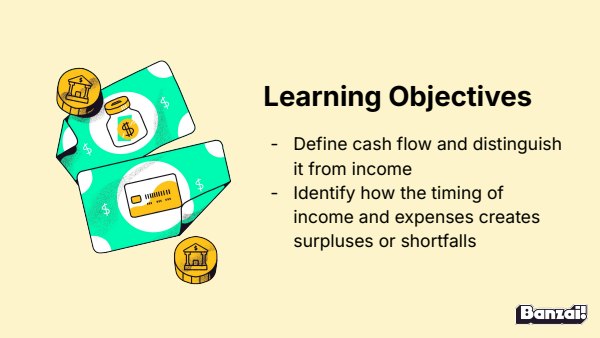
- Define cash flow and distinguish it from income.
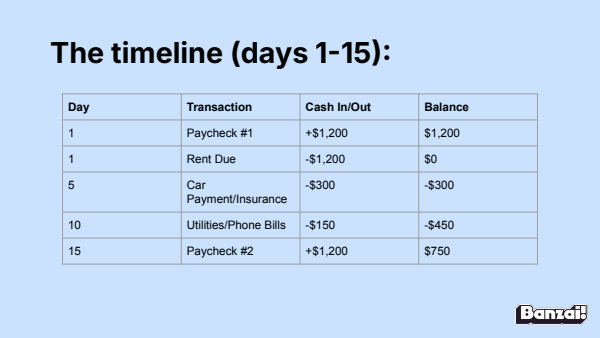
- Identify how the timing of income and expenses creates surpluses or shortfalls.
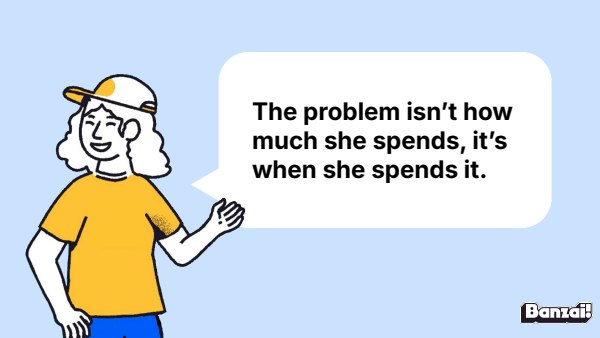
Discussion: Paycheck-to-Paycheck Trap
- Discuss why high earners still live paycheck to paycheck and which cash flow strategy matters most.
Activity: Life Scenarios
- Students continue the Life Scenarios game.
- Circulate and ask students to narrate one cash flow decision they just made.
Wrap-Up & Assessment
- What's the difference between income and cash flow?
- Name one expense-timing strategy that keeps cash flow positive.
| Est. Time | Activity | Description |
|---|---|---|
| 5 min | Bellringer: Where Did the Money Go? |
|
| 10 min | Instruction |
|
| 5 min | Discussion: Paycheck-to-Paycheck Trap |
|
| 20 min | Activity: Life Scenarios |
|
| 5 min | Wrap-Up & Assessment |
|
Lesson Prep

Life Scenarios
Students continue playing the Life Scenarios game.
Class Presentation
Includes a 17-slide deck with teacher notes. Present from Banzai, download a PDF, or copy it to Google Slides.



Presentations, Ready to Go
- Built-in PresentationPresent full screen, straight from Banzai
- Copy to Google SlidesMake an editable copy for your class
- Download or PrintSave as a PDF or print
- Teacher NotesSlide-by-slide guidance, printable as one handout
Unit 4: Budgeting

Fixed & Variable Expenses
Rent stays the same after a bad month—the grocery bill doesn't. This lesson teaches students to classify expenses as fixed or variable and launches the Life Scenarios budgeting simulation.
Cash Flow
Money in minus money out sounds simple—until one bad month wipes out savings. This lesson explores how cash flow works, why timing matters, and how to keep more money than you spend.
Major Expenses
Most people underestimate housing and transportation costs, but together they can consume 70% of an adult's budget. This lesson breaks down upfront and ongoing costs of renting, total cost of car ownership, and trade-offs that define financial stability.
How do Banzai lesson plans work? See the FAQ.